

You’ve probably seen plenty of bad commercials: the kind that are confusing, boring, or forgettable. You’ve also seen ones that stick with you, make you laugh, grab your attention, or get you to act.
So what’s the difference? And does this difference really matter for your business?
DW Creative is a Kansas City-based marketing agency that drives growth for clients by creating meaningful connections between their clients’ brands and the homeowners they serve.
By reading this article, you’ll learn what makes a commercial effective, what common mistakes to avoid, and how to make sure your ad communicates the right message.
What’s the Goal of a Commercial?
A good commercial is one of the most effective tools for getting attention and inspiring action. Done well, a commercial can carry your message farther than a dozen emails or blog posts. Done poorly, it can confuse people, or worse, get ignored entirely.
Before you think about visuals or script or even what platform it’s going on, you need to start with one question: What do you want this commercial to do?
Commercials are meant to achieve a marketing objective. That might mean:
- Getting someone to call your office
- Sending viewers to a landing page
- Encouraging people to make a purchase
- Or simply building brand awareness.
Every decision you make—how the commercial looks, what it says, how long it is—should support that goal. If a commercial looks great but doesn’t move people to act or remember your brand, it hasn’t done its job.
What Makes a Good Commercial?
A good commercial achieves its objective. Some of the most “unusual” ads end up being the most successful, as long as they’re clear, consistent, and purposeful.
Let’s break down the key elements of a strong commercial:
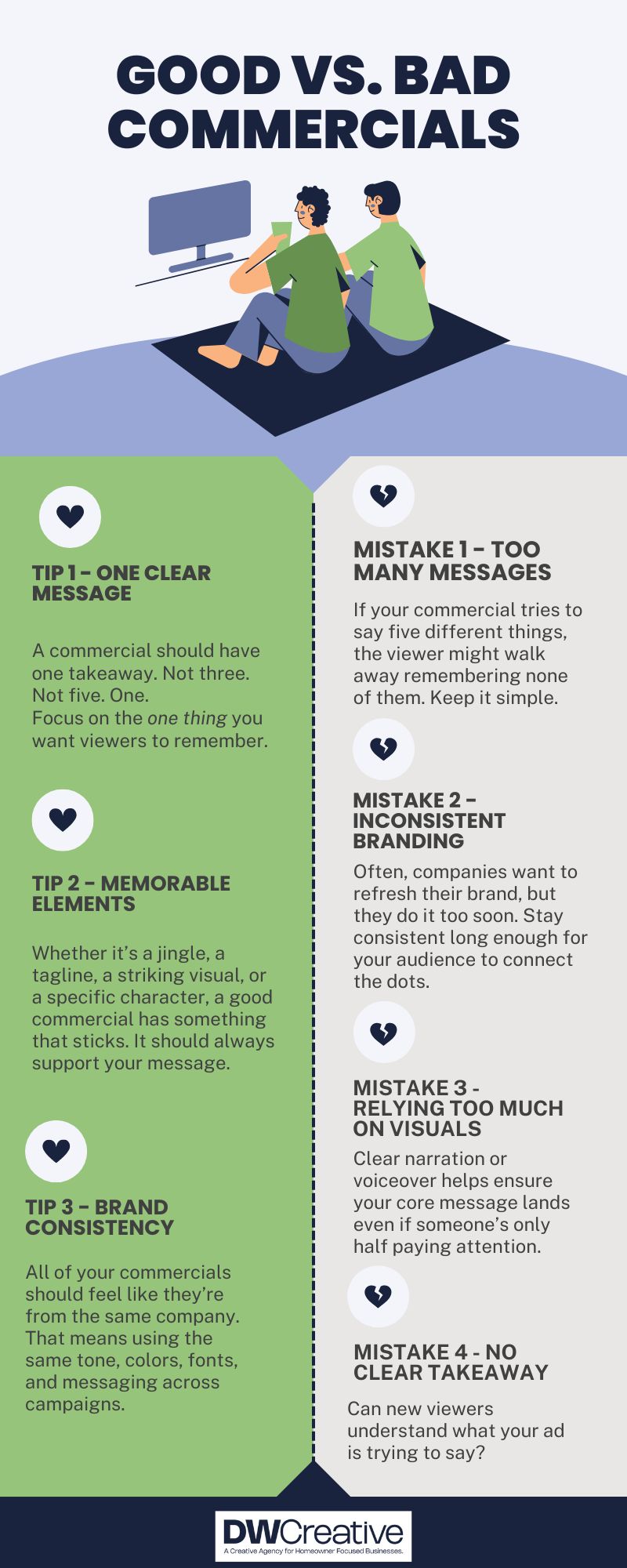
1. One Clear Message
A commercial should have one takeaway. Not three. Not five. One.
If you try to tell people everything about your business in 30 seconds, they’ll shut down. It takes energy to process information, and most people won’t put in that effort. They’ll walk away and wonder which message was most relevant to them if they remember any messaging at all.
In addition, commercials generally run for 10-60 seconds. That’s not a lot of time to grab someone’s attention, send a message, and inspire action.
Instead, focus on the one thing you want viewers to remember. Resist the urge to mention your business’s history, turnaround times, and awards. Save those for later.
2. Memorable Elements
Whether it’s a jingle, a tagline, a striking visual, or a specific character, a good commercial has something that sticks.
But that “memorable thing” should always support your message. If people remember your joke but not your company name, the ad didn’t work. Aim for style with substance.
3. Brand Consistency
All of your commercials should feel like they’re from the same company. That means using the same tone, colors, fonts, and messaging across campaigns.
A good test: If you swapped in a competitor’s logo on your ad, would it feel wrong? If not, your branding might need work. Your commercial should feel unmistakably you.
Common Mistakes (That Make for a Bad Commercial)
Even with the best intentions, a commercial can easily go off-track. Here are some of the most common pitfalls:
1. Too Many Messages
If your commercial tries to say five different things, the viewer might walk away remembering none of them.
Keep it simple. If the key message is “download our buyer’s guide,” don’t bury it under a bunch of unrelated benefits.
2. Inconsistent Branding
Often, companies want to refresh their brand, but they do it too soon. Just when the public is starting to recognize your message, you switch it up and start from scratch.
It’s okay to evolve, but stay consistent long enough for your audience to connect the dots.
3. Relying Too Much on Visuals
Many people don’t watch commercials with their full attention. Some are cooking, some are scrolling their phones, and some just have the TV on for background noise.
If your ad has no narration, your message may not get through. That’s why both sight and sound matter. Clear narration or voiceover helps ensure your core message lands even if someone’s only half paying attention.
4. No Clear Takeaway
Sometimes, businesses try so hard to be clever or artistic that the audience walks away confused. They may say, “What was that even about?”As a business owner, you know what the message is, but someone unfamiliar with your brand might not. Ask yourself, “Can a brand-new viewer understand what this ad is trying to say?” If not, then it might be time to revisit and rework the commercial.
Tools That Can Help You Create a Great Commercial
Storyboards
Before you shoot your ad, lay it out visually. A storyboard helps you see the flow of the commercial. It also helps you get feedback early.
User Testing Tools (like Lyssna)
Platforms like Lyssna let you show your ad to a panel of viewers and get feedback before you launch. You’ll learn what’s working and what’s confusing before you spend money on airtime.
Stakeholder Review
Show your draft to people outside your marketing team. If your message doesn’t land with someone unfamiliar with your business, it probably won’t land with your target audience either.
How a Marketing Agency Can Help
When putting together a commercial, a good marketing agency can help you:
- Refine your message.
- Ensure your commercial supports your business goals.
- Keep everything on-brand.
- Guide what kind of ad fits your audience and your budget.
However, if your marketing partner keeps pushing ideas that don’t support your goals or if they’re not listening to your input, that could be a sign they’re more focused on their vision than yours.
For example, if your goal is to drive traffic to your website but your agency wants to make an ad that just “builds brand awareness,” there’s a disconnect. You want a marketing partner who helps create a commercial that fits your brand and your goals.
Next Steps for Crafting a Great Commercial
A commercial is more than just a short video. It’s a tool to help you reach your business goals. Whether you want people to visit your website, remember your brand, or take a specific action, a good commercial is built with that one objective in mind.
A solid, successful commercial:
- Communicates one clear message.
- Is memorable.
- Is consistent with your brand.
Before you start creating your commercial, take a moment to ask yourself:
- What do I want this commercial to achieve?
- What one message should viewers walk away with?
- How will I make sure that the message is clear, even if someone’s only half paying attention?
- Does this align with our brand, visually and emotionally?
If you’re ready to take the next step, start by clarifying your goal and your message. From there, everything else—your script, visuals, narration, and call to action—should work together to support that core idea. When done well, a great commercial can help you stand out, build trust, and grow your business.
If you’re looking for help creating marketing videos, schedule a fit call with our team to see how DW Creative can help.
If you’re not ready to make a commitment or want to learn more about marketing videos, we recommend the following articles:
 SJ Bocci Writes